

The Nature's Store
Matcha Tea
Matcha Tea
TRENDING 🔥

50,000+ Satisfied Customers

Free From Additives

No Preservatives
Bundle Offers


Description
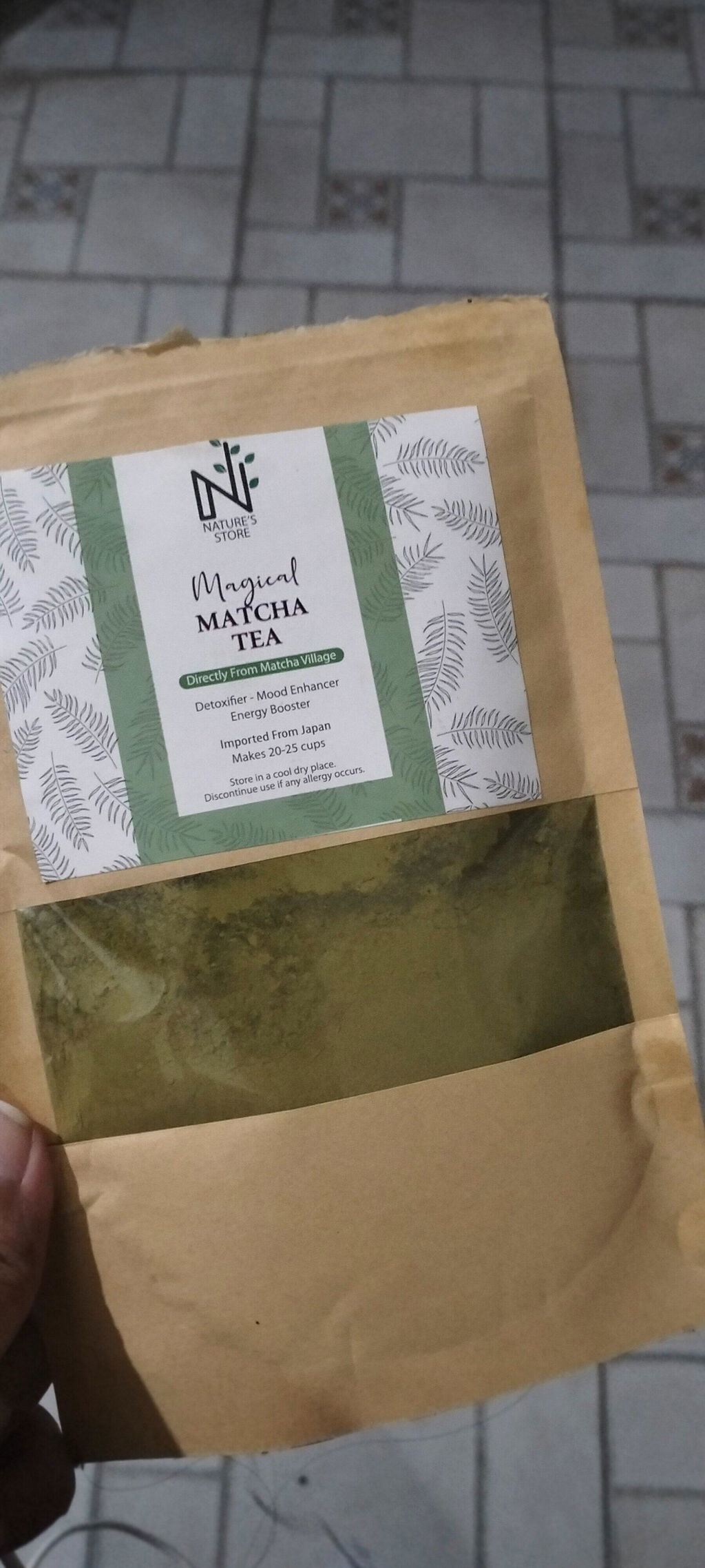
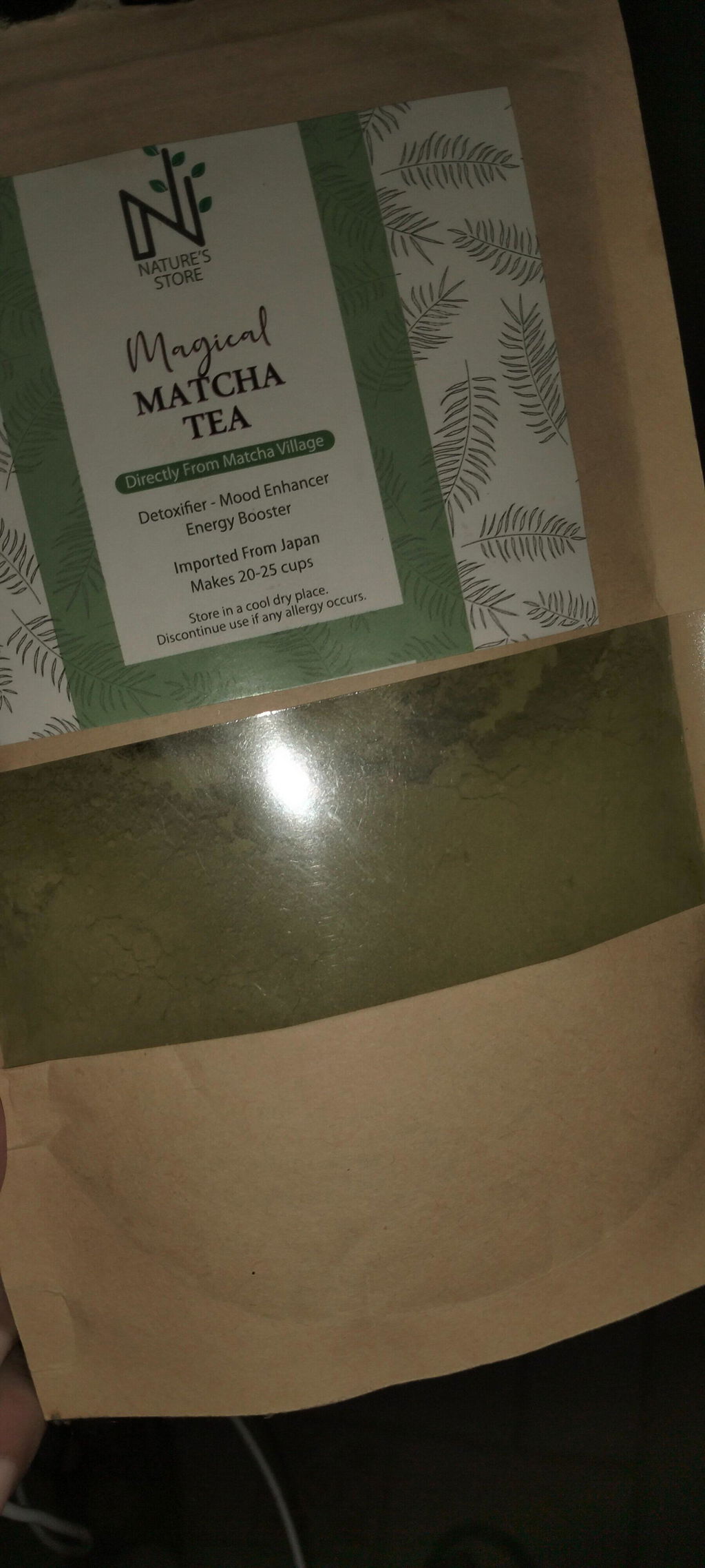
| Quantity | 50 Grams (Makes 25 Lattes) |
| Origin | Japan (Kyoto) |
| Season | Second Harvest |
| Grade | Medium |


Benefits of Drinking Matcha Tea
What is Matcha Powder?
Matcha powder is a finely ground, vibrant green tea powder made from shade-grown Japanese green tea leaves called Tencha. Unlike regular green tea Matcha has more antioxidants per cup.
Matcha in Urdu is ماچا چائے
Top 5 Health Benefits of Matcha
- Matcha contains antioxidants, which may reduce cell damage and prevent chronic disease.
- Some studies have shown that matcha could prevent liver damage and decrease the risk of liver disease.
- Matcha has been shown to improve attention, memory, and reaction time. It also contains caffeine and L-theanine, which can improve several aspects of brain function.
- Matcha can decrease several heart disease risk factors.
It can help increase metabolism and fat burning, both of which may aid weight loss.
Ref: https://www.healthline.com/nutrition/7-benefits-of-matcha-tea#easy-to-make
Matcha Recipes
Let's learn How to make Matcha in different ways.
Matcha Drink Recipes:
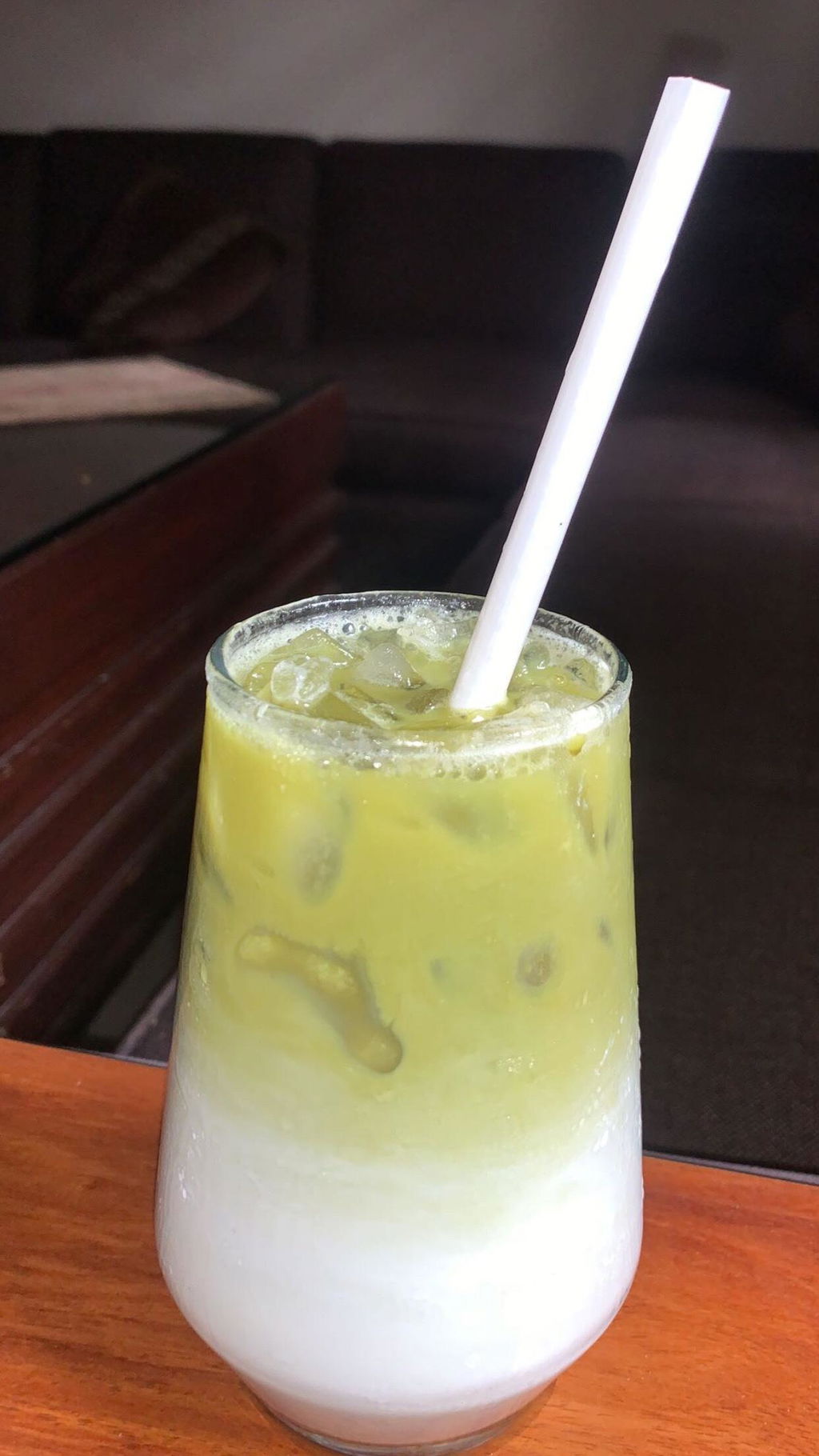
Plain Matcha Latte:
1. Sift matcha powder through a fine-mesh strainer into a bowl to remove clumps.
2. Add a small amount of hot water (ideally 175°F / 80°C) to the powder.
3. Whisk vigorously in a zigzag "W" or "M" motion until a smooth, frothy paste forms.
4. Pour in the remaining hot water or milk (for a tea/latte). For Iced Matcha Latte, add chilled milk.
Sweeten with Honey or Sugar (if required).
Strawberry Matcha Latte:
1. Sift Strawberry Matcha powder through a fine-mesh strainer into a bowl to remove clumps.
2. Add a small amount of hot water (ideally 175°F / 80°C) to the powder.
3. Whisk vigorously in a zigzag "W" or "M" motion until a smooth, frothy paste forms.
4. Take 3 to 4 fresh strawberries and crush them to form a thick paste.
5. In a glass add Matcha, remaining chilled milk and strawberry puree, Top it with lots of ice cubes. Stir and enjoy
(You can make Matcha with fresh fruits of flavoured syrups)
Disclaimer
Results may vary from person to person. For maximum health benefits, our teas should be consumed in conjunction with a balanced diet and exercise routine.
Our teas are not intended to diagnose, treat, cure, or prevent any disease, nor as a substitute for any treatment or surgery that may have been prescribed by your physician.
You should consult your physician before treating yourself with teas, mixing them with any medications, or taking them instead of prescribed medication.
For further medical disclaimer, please click on the link below:
https://thenaturesstore.com/pages/medical-disclaimer-for-herbal-teas?_pos=2&_sid=6866d2b3e&_ss=r
FAQ's
Q: What sets Matcha apart from regular green tea?
Difference between Matcha and green tea:
| Feature | Matcha | Regular Green Tea |
| Form | Stone-ground powder | Loose leaves or tea bags |
| Consumption | You drink the whole leaf | You steep and discard the leaf |
| Caffeine | 60–70 mg per cup | 20–40 mg per cup |
| Antioxidants | Very high (esp. EGCG) | Moderate |
| Flavor | Rich, creamy, earthy (umami) | Light, grassy, slightly bitter |
| Preparation | Whisked with water, ceremonial style | Steeped in hot water |
| Nutrient Absorption | Higher (entire leaf is consumed) | Lower (just infused) |
Q: What is matcha?
A: Matcha is a finely ground powder made from shade-grown green tea leaves. Unlike regular green tea where you steep and discard the leaves, with matcha you whisk the whole powdered leaf into water or milk, so you get more of its antioxidants and nutrients in every cup.
Q: What is matcha made of?
A: Matcha is produced by steaming, drying, and grinding 100% green tea leaves (Camellia sinensis) into a fine, bright-green powder. The leaves are shade-grown for 3–4 weeks before harvest, which boosts their colour, sweetness, and nutrient content. Good matcha contains nothing else, no fillers or additives.
Q: What does matcha taste like? Is it sweet or bitter?
A: Good matcha has a smooth, earthy, umami flavour with natural sweetness and a creamy finish. High-quality matcha is smooth, creamy, and mildly sweet, while low-quality matcha is harsh, overly grassy, or bitter. Even good matcha can turn bitter if made with boiling water, so use water around 80°C.
Q: How do you tell if matcha is fake or low quality?
A: Check the colour. Premium matcha is a vibrant, deep emerald green. Pale, yellowish, or brownish powder usually signals low-quality leaves or poor processing.
Q: What is matcha pronunciation?
A: It's pronounced "MAA-CHA", rhyming with "gotcha."
Q: What is matcha in Urdu? / Matcha meaning in Urdu
A: Matcha doesn't have a traditional Urdu name since it originates from Japan. It's a powdered green tea (سبز چائے کا پاؤڈر) and is simply written as "میچا."
Q: Which country is known for matcha?
A: Japan is most known for matcha and produces the highest quality. It's also grown in China, but Japanese matcha is considered superior in colour, flavour, and grade.
Q: Is matcha available in Pakistan? What is the price?
A: Yes, matcha is available in Pakistan with nationwide delivery, including Lahore, Karachi, and Islamabad. Since it isn't grown locally, quality depends on careful sourcing, so choose pure, bright-green Japanese matcha. Price varies by grade and quantity. [Insert your price/range here.
Q: How do you make matcha?
A: Sift 1 teaspoon (about 1–2 grams) of matcha into a cup, add a little hot water (around 80°C), and whisk in a zig-zag motion until frothy. Add more water, or warm milk for a latte.
Q: How do you make a matcha latte?
A: Whisk 1 teaspoon of matcha with a little hot water until smooth, then pour in warmed milk (dairy or plant-based) and sweeten to taste. Serve hot or pour over ice for an iced matcha latte.
Q: Can I sweeten matcha with sugar?
A: You can, but natural sweeteners like honey or stevia are a healthier choice. If sugar isn't a concern for you, it works fine too.
Q: Does matcha have caffeine?
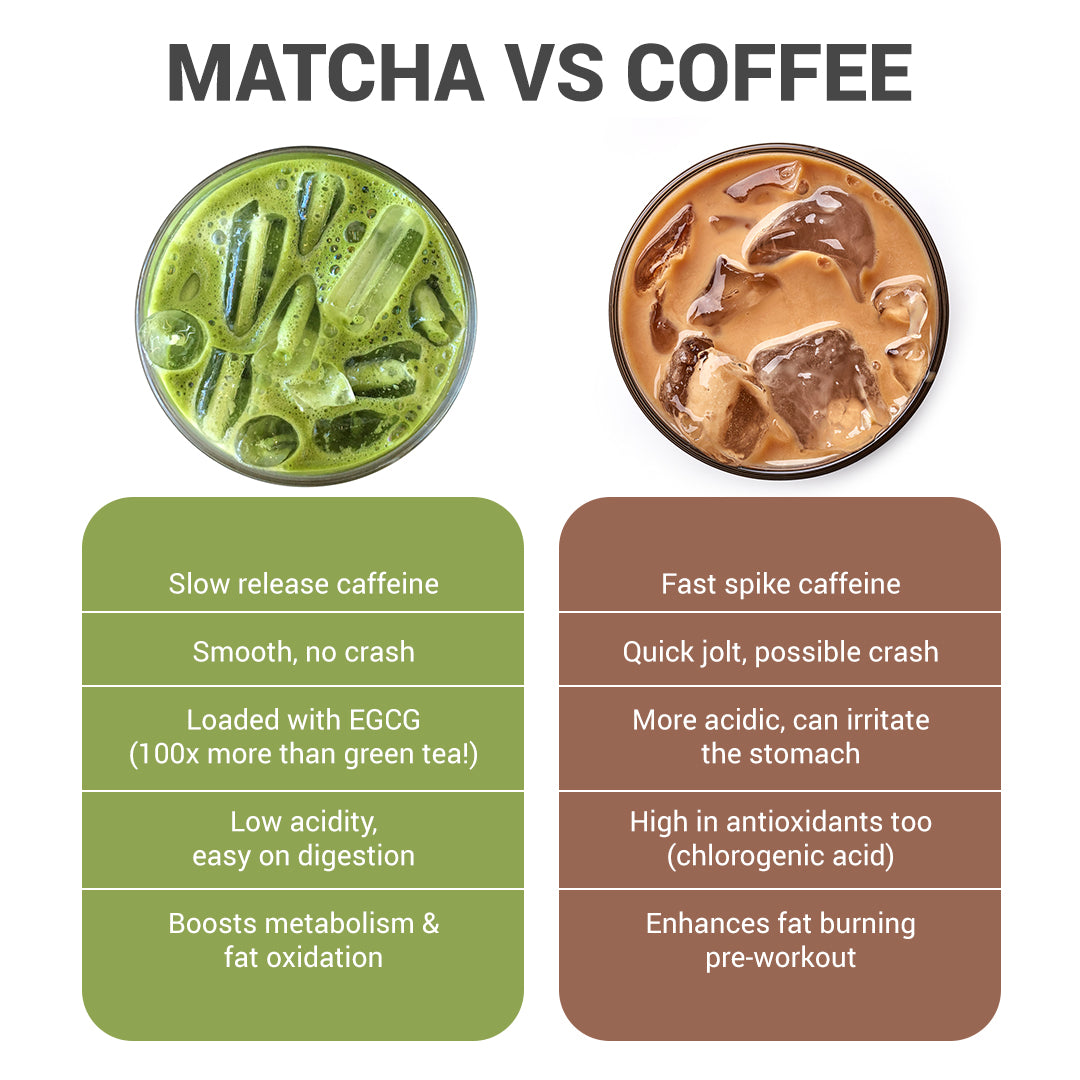
A: Yes, roughly 35–70 mg per cup depending on how much powder you use. The caffeine in matcha is balanced by L-theanine, which gives calm alertness and sustained focus, without the jitters or crash you get from coffee.
Q: Is matcha good for weight loss?
A: Matcha can support weight management, though diet and exercise matter most. It contains EGCG, an antioxidant that enhances thermogenesis (the calorie-burning process), helping your body burn slightly more calories at rest. It works best as a low-calorie replacement for sugary drinks alongside a balanced diet.
Q: Is matcha good for skin?
A: Yes, matcha supports skin health in several ways:
- Fights ageing: antioxidants (especially EGCG) help prevent wrinkles and dullness
- Clears acne: anti-inflammatory properties reduce breakouts and redness
- Detoxifies naturally: chlorophyll helps remove toxins
- Balances hormones: may reduce stress-related and hormonal acne
Boosts glow: promotes hydration for a healthy, radiant look
Q: Is matcha the same as green tea?
A: Both come from the same plant, but with green tea you steep and remove the leaves, while with matcha you drink the whole leaf as powder, giving it a stronger flavour, more antioxidants, and more caffeine per cup.
Q: Can I use matcha in cooking or baking?
A: Yes. Matcha adds a distinctive flavour and colour to desserts and drinks, from matcha lattes and smoothies to matcha cookies, brownies, and cakes. Culinary-grade matcha is ideal for baking, while ceremonial-grade is best kept for drinking.
Q: How often should I drink matcha?
A: For most people, 1–2 cups daily is the sweet spot for steady benefits. As with anything, moderation matters, more isn't better.
Q: What are the side effects of matcha?
A: Matcha is safe for most healthy adults at 1–2 cups per day. A few things to keep in mind:
- It contains 35–70 mg caffeine per cup; if you're caffeine-sensitive, avoid drinking it after 3 pm
- Tannins may cause mild nausea in some people, so drink after a light meal
- It contains Vitamin K, which may interact with blood-thinning medication, consult your doctor
- Excessive intake (more than 3 cups daily) may contribute to oxalate buildup and can affect iron absorption
Moderation is key: 1–2 cups daily is the sweet spot for most people.
Q: Can pregnant or breastfeeding women drink matcha?
A: Because matcha contains caffeine, it's best for pregnant and breastfeeding women to consult a healthcare professional before adding it to their routine.
Q: Does matcha have an expiry date?
A: Matcha has a shelf life of about 2–3 years unopened. Store it in a cool, dark place, away from light and moisture, for optimal freshness and colour.
Q: Can children drink matcha?
A: In moderation, yes, but because matcha contains caffeine, it's best to consult a pediatrician first.
Q: Is matcha Halal?
A: Yes. Pure matcha is made only from green tea leaves, with nothing added, so it is Halal.


Note: Our Testimonials consist of authentic submissions from customers, supplemented by feedback obtained through telephone conversations and various social media platforms.