
The Nature's Store
Ashwagandha
Ashwagandha
Description
Ashwagandha (Withania somnifera), known in Urdu as اشوگندھا and traditionally sold across Pakistan as asgand nagori (اسگند ناگوری), is one of the most widely used adaptogen herbs in the world.
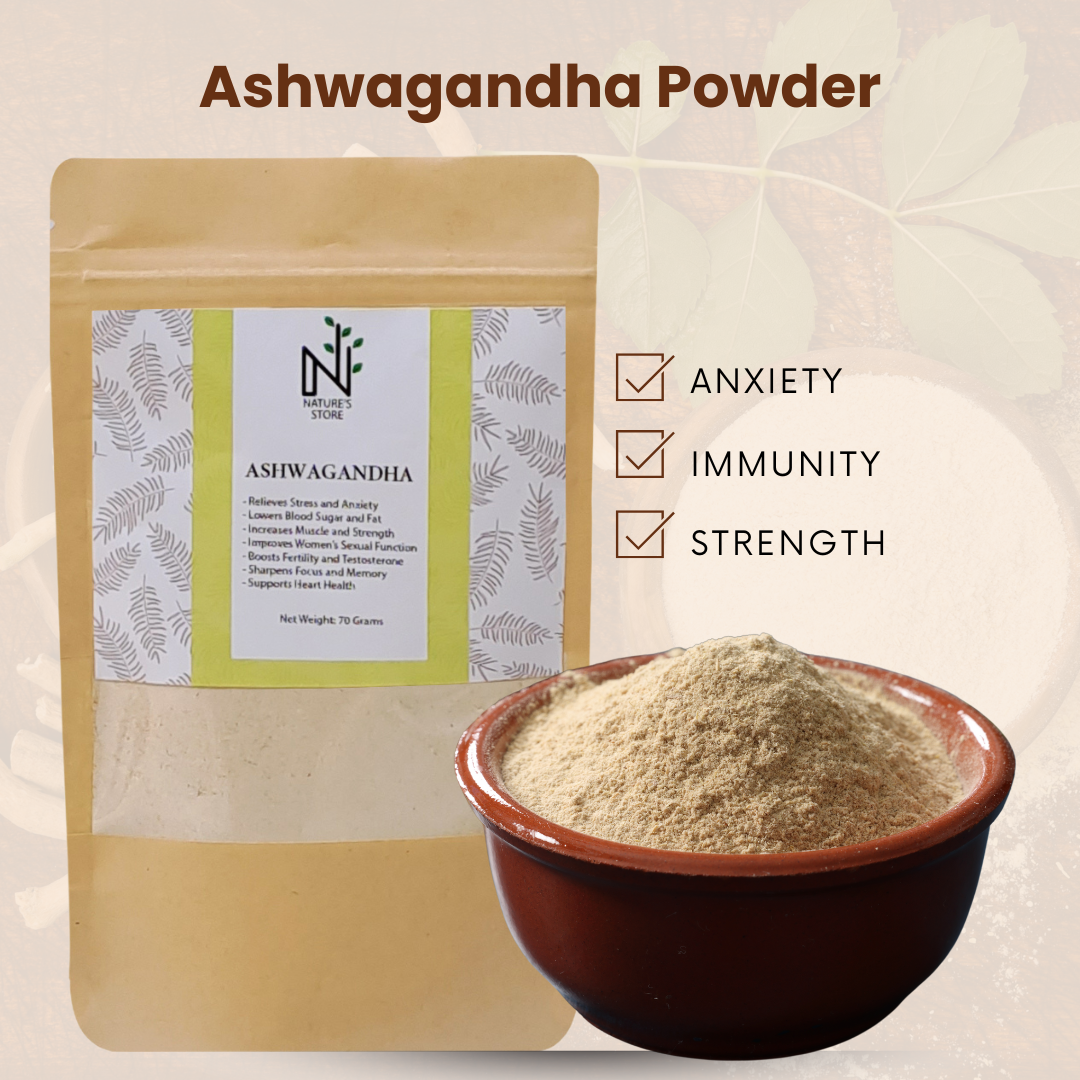
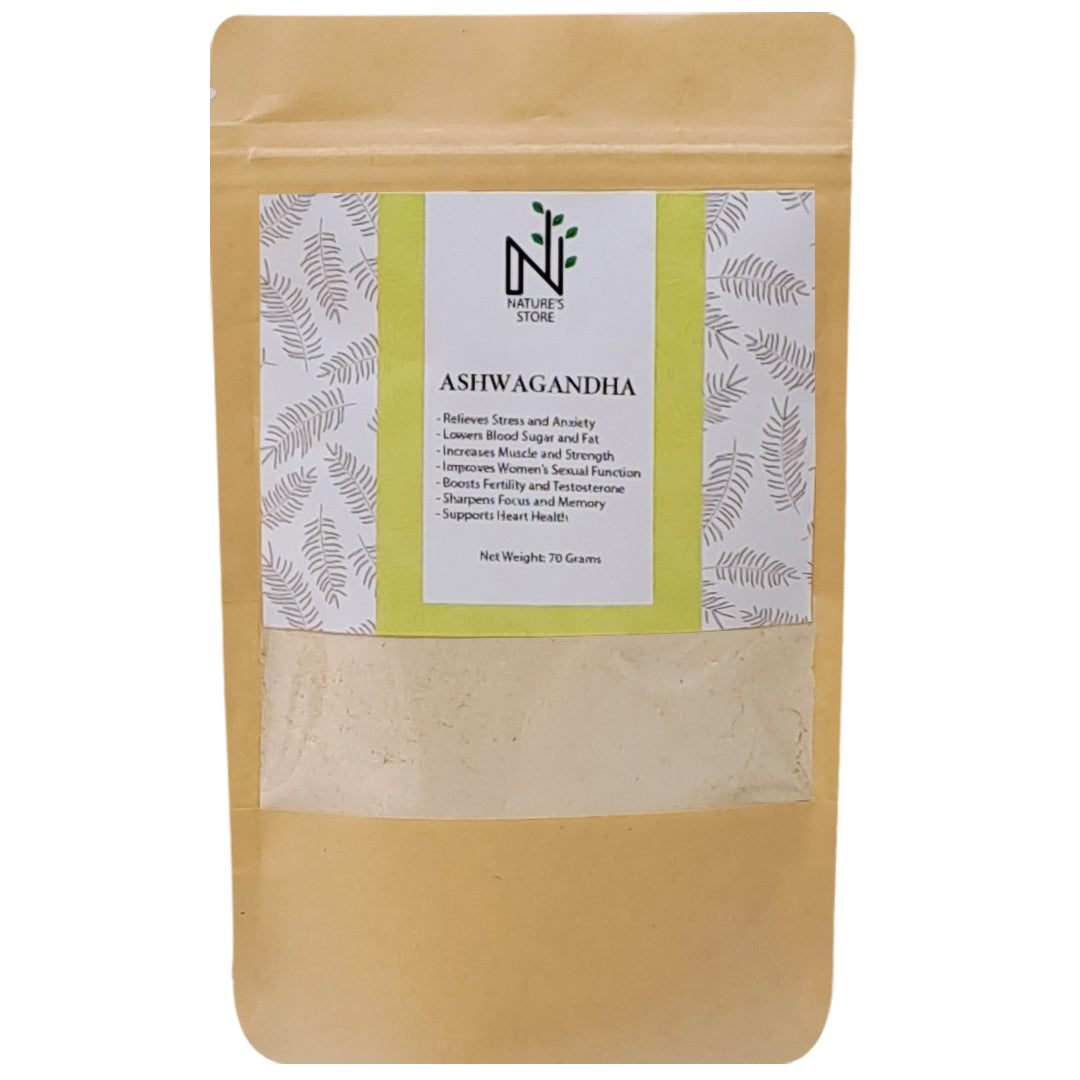
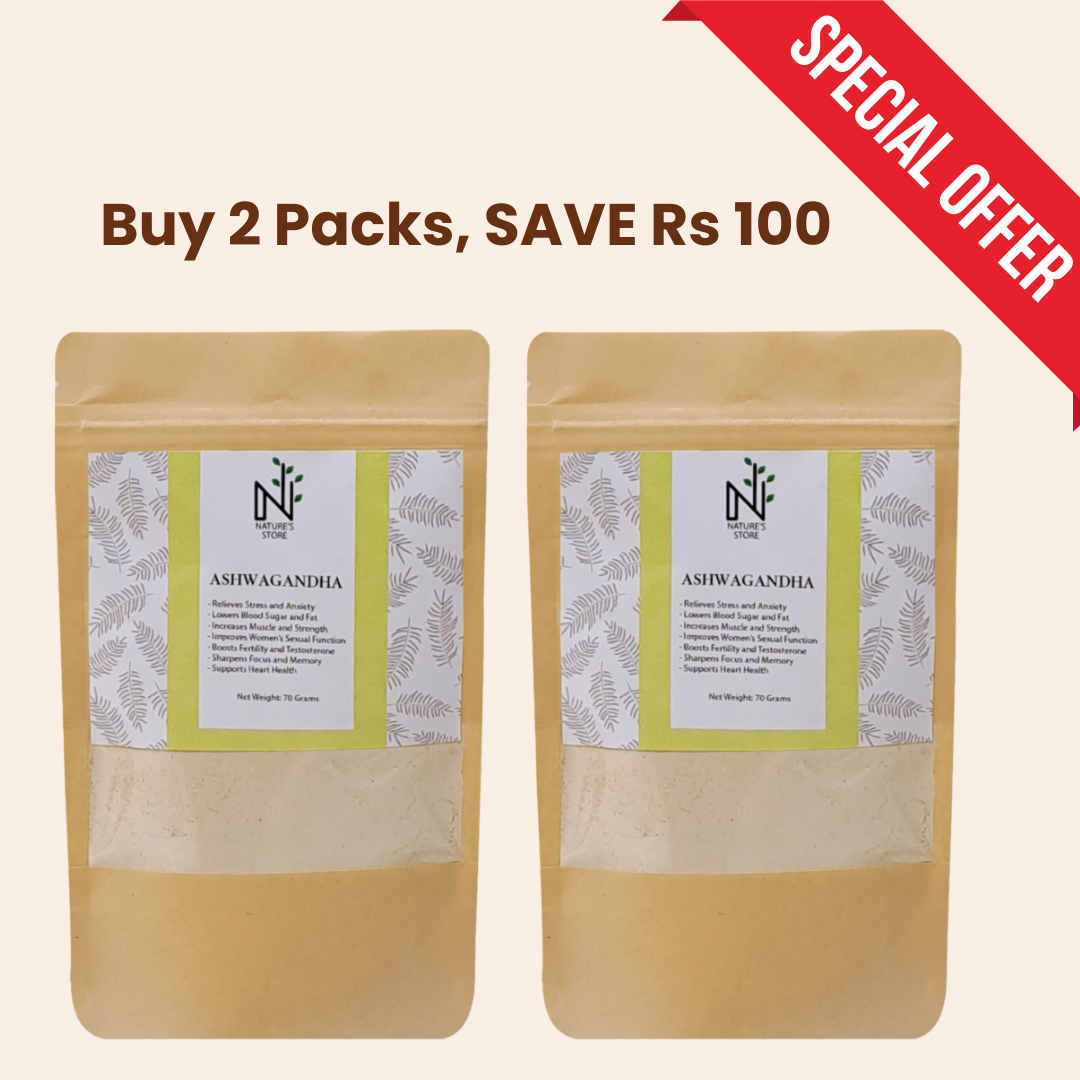
At The Nature's Store, we stock pure ashwagandha root powder, ground from whole roots with nothing added: no fillers, no flow agents, no bulking starch.
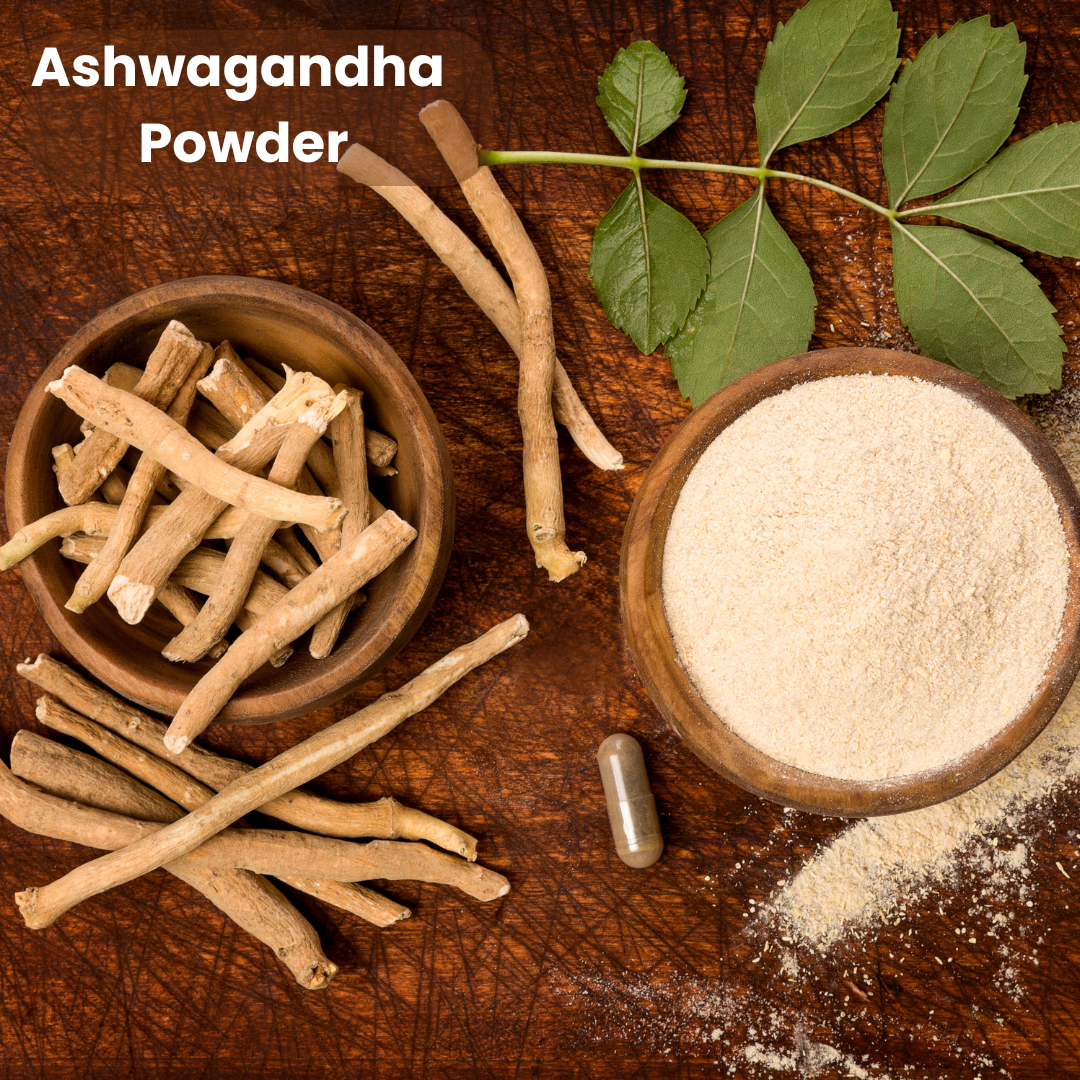
This is pure ashwagandha root powder. Not an extract, not a blend, and not a capsule filler. The root is the part of the plant carrying the withanolides that ashwagandha is valued for, and root powder is the form used in traditional Ayurvedic and Unani practice for centuries.


Urdu Name for Ashwangha: اسگندھ (Isgandh)
Benefits
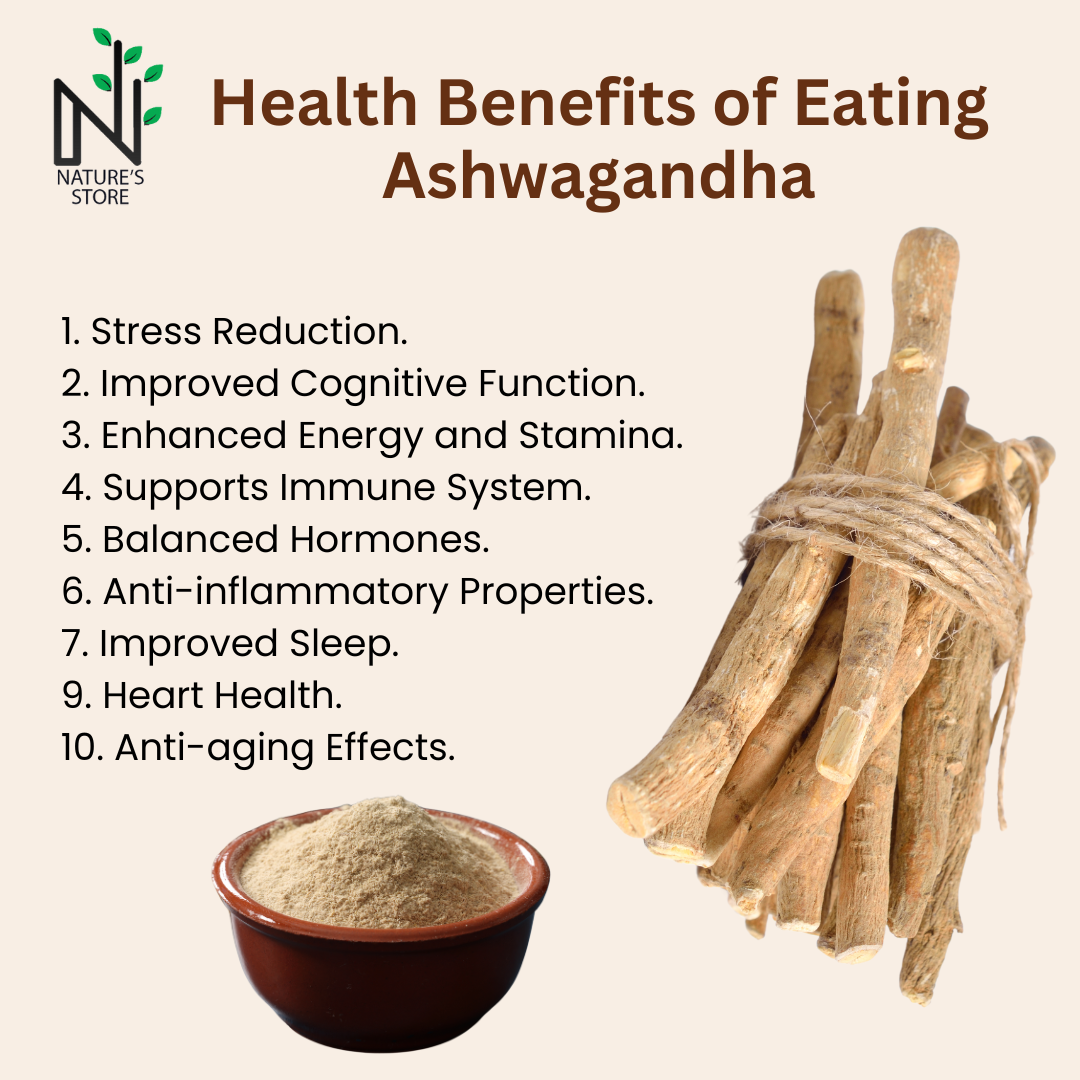
Benefits of Ashwagandha Powder:
Stress and Cortisol
Ashwagandha significantly reduced morning cortisol and anxiety scores versus placebo.
Sleep
Small but statistically significant effect on overall sleep.
Anxiety
Two placebo-controlled studies found reduced anxiety in adults with generalized anxiety disorder.
Strength and Physical Performance
Very high probability of clinically significant strength and power gains versus placebo.
In recent years, there has been a significant surge in reports on the health-promoting benefits of winter cherry (Withania somnifera), also known as Ashwagandha.
Its current research covers many aspects of human health, including neuroprotective, sedative and adaptogenic effects and effects on sleep. There are also reports of anti-inflammatory, antimicrobial, cardioprotective and anti-diabetic properties. Furthermore, there are reports of reproductive outcomes and tarcicidal hormone action. This growing body of research on Ashwagandha highlights its potential as a valuable natural remedy for many health concerns.
- Based on research from journals indexed in the National Library of Medicine
https://www.ncbi.nlm.nih.gov/pmc/articles/PMC10147008/
- A 60-day double-blind trial of 60 stressed adults, 240mg daily, no adverse events. Lopresti, 2019
- Langade, 2019
- Bonilla, 2021
- Pérez-Gómez, 2020
How to Prepare & Take Ashwagandha Powder
How to Use Ashwagandha Powder
Ashwagandha Powder with Milk (the traditional method)
The classic preparation, and the one most commonly used in Pakistan:
- Warm one cup of milk (dairy or plant-based) until hot but not boiling
- Add ½ teaspoon (about 2–3g) of ashwagandha root powder
- Stir well for 30 seconds until fully dissolved with no clumps
- Add honey, jaggery, or dates to taste: ashwagandha is naturally bitter and earthy
- Drink warm, ideally 30–60 minutes before bed
Warm milk is used traditionally because ashwagandha's active compounds are fat-soluble, so the fat in milk helps carry them. This is why doodh ke saath is the preparation passed down rather than water.
Ashwagandha Powder with Water
If you avoid dairy or want it faster: stir ½ teaspoon into warm water, add honey, and drink. Simpler, though the flavour is sharper without fat to round it out.
Ashwagandha with Honey
Mix ½ teaspoon of powder into a teaspoon of raw honey and take it straight, followed by water. Useful if you dislike the taste in liquid.
In Smoothies, Tea, and Food
Ashwagandha powder blends into banana or date smoothies, mixes into porridge, and stirs into herbal tea. The flavour is earthy and slightly bitter, so pair it with sweet or strong flavours: cocoa, banana, cinnamon, cardamom.
Ashwagandha Dosage
A typical serving of ashwagandha root powder is ½ to 1 teaspoon (roughly 2–5g) per day. Start at the lower end for the first two weeks and increase if it suits you. Traditional use often splits this into a morning and an evening dose.
Best Time to Take Ashwagandha: Morning or Night?
Both work, and it depends on your goal:
- At night: the most common choice. Somnifera means sleep-inducing, and taking it before bed suits people using it for rest and winding down.
- In the morning: better if you're taking it for daytime energy, focus, or stress across the working day. Take it with food.
Split dose: half in the morning, half at night, for consistent levels through the day.
Consistency matters more than timing. Ashwagandha is not a fast-acting herb: most traditional and clinical use runs 6–12 weeks of daily intake.
Disclaimer
Results may vary from person to person. For maximum health benefits.
Ashwagandha is a traditional herbal product, not a medicine. It is not intended to diagnose, treat, cure, or prevent any disease. Consult a qualified doctor before use.
You should consult your physician before treating yourself with teas, mixing them with any medications, or taking them instead of prescribed medication.
Please click here for further disclaimer:
https://thenaturesstore.com/pages/disclaimer-for-food-products
FAQ's
What is ashwagandha called in Pakistan?
In Pakistan, ashwagandha is most commonly sold as asgand nagori (اسگند ناگوری), or simply asgand. In Urdu it is written اشوگندھا. Its botanical name is Withania somnifera, and in English it is sometimes called Indian Ginseng or Winter Cherry. If you're searching for asgand nagori, this is the same herb.
What is the Urdu name of ashwagandha?
اشوگندھا (ashwagandha), also widely known as اسگند ناگوری (asgand nagori). Both refer to the root of the same plant, Withania somnifera.
Is ashwagandha halal or haram?
Ashwagandha is a plant root. It is a herb, not an intoxicant, and contains no animal-derived or alcohol-based ingredients. Our ashwagandha powder is 100% pure ground root with nothing added, making it suitable for halal dietary requirements. Note that some imported ashwagandha tinctures and homeopathic drops (such as ashwagandha Q) are alcohol-based: that is a property of the tincture format, not the herb.
What is ashwagandha good for?
Ashwagandha is an adaptogen, meaning it is traditionally used to help the body manage stress. Its most common uses are supporting a healthy stress and cortisol response, promoting restful sleep, supporting energy and stamina, and general vitality for men and women. It is a traditional herb, not a medicine, and is not intended to diagnose, treat, or cure any condition.
What is the ashwagandha powder price in Pakistan?
Price of Ashwagandha in Pakistan starts from Rs 700.
Is ashwagandha ok to take daily?
Ashwagandha is traditionally taken daily, and that is how it is intended to be used: it builds up over weeks rather than acting immediately. Many people take it continuously; others cycle it with a break every few months. If you are pregnant, breastfeeding, taking thyroid or blood pressure medication, or have an autoimmune condition, speak to a doctor before starting.
What are the side effects of ashwagandha?
For most people ashwagandha is well tolerated. Reported side effects are usually mild and dose-related: stomach upset, drowsiness, or loose stools, most often when taken on an empty stomach or at a high dose. Taking it with food or milk usually resolves this.
Who should not take ashwagandha?
Ashwagandha is not recommended during pregnancy. Caution is advised if you take thyroid medication (it may affect thyroid hormone levels), sedatives, or blood pressure medication, or if you have an autoimmune condition such as lupus or rheumatoid arthritis. It is also part of the nightshade family, which is worth knowing if you are sensitive to nightshades. Consult a doctor if any of these apply.
What not to mix with ashwagandha?
Take care combining ashwagandha with sedatives or sleep medication, as the effects may compound. The same applies to thyroid medication and blood pressure medication. Ashwagandha is commonly combined with other herbs such as shatavari, safed musli, or shilajit in traditional preparations, and is fine to take alongside food.
What is the best time to take ashwagandha: morning or night?
Night is the most popular choice, since ashwagandha is traditionally associated with restful sleep (somnifera means sleep-inducing). Morning works better if your goal is daytime energy and stress support. Some people split the dose across both.
Is your ashwagandha powder pure, or is it an extract?
This is 100% ashwagandha root powder: whole roots, ground, nothing else. No fillers, no flow agents, no maltodextrin, no extract standardisation. Root powder is the traditional form used in Ayurvedic and Unani practice.
Is ashwagandha good for women?
Yes. Ashwagandha is traditionally used by both men and women. Its adaptogen and sleep-supporting uses are not gender-specific. It should not be taken during pregnancy.
Does ashwagandha lower cortisol?
Ashwagandha is classified as an adaptogen and has been studied for its effect on the body's stress response. This is the most researched aspect of the herb. We'd encourage you to read the research yourself: we sell it as a traditional herbal product, not a clinical treatment.
How long does ashwagandha take to work?
Ashwagandha is not fast-acting. Traditional and clinical use runs 6 to 12 weeks of consistent daily intake. If you're expecting a same-day effect, this is the wrong herb.
Ashwagandha powder or tablets: which is better?
Powder is the traditional form and lets you control your own dose, mix it with milk, and see exactly what you're getting. Tablets and capsules are more convenient but often contain binders, fillers, and coatings. Pure root powder is what we stock.
Note: Our Testimonials consist of authentic submissions from customers, supplemented by feedback obtained through telephone conversations and various social media platforms.